
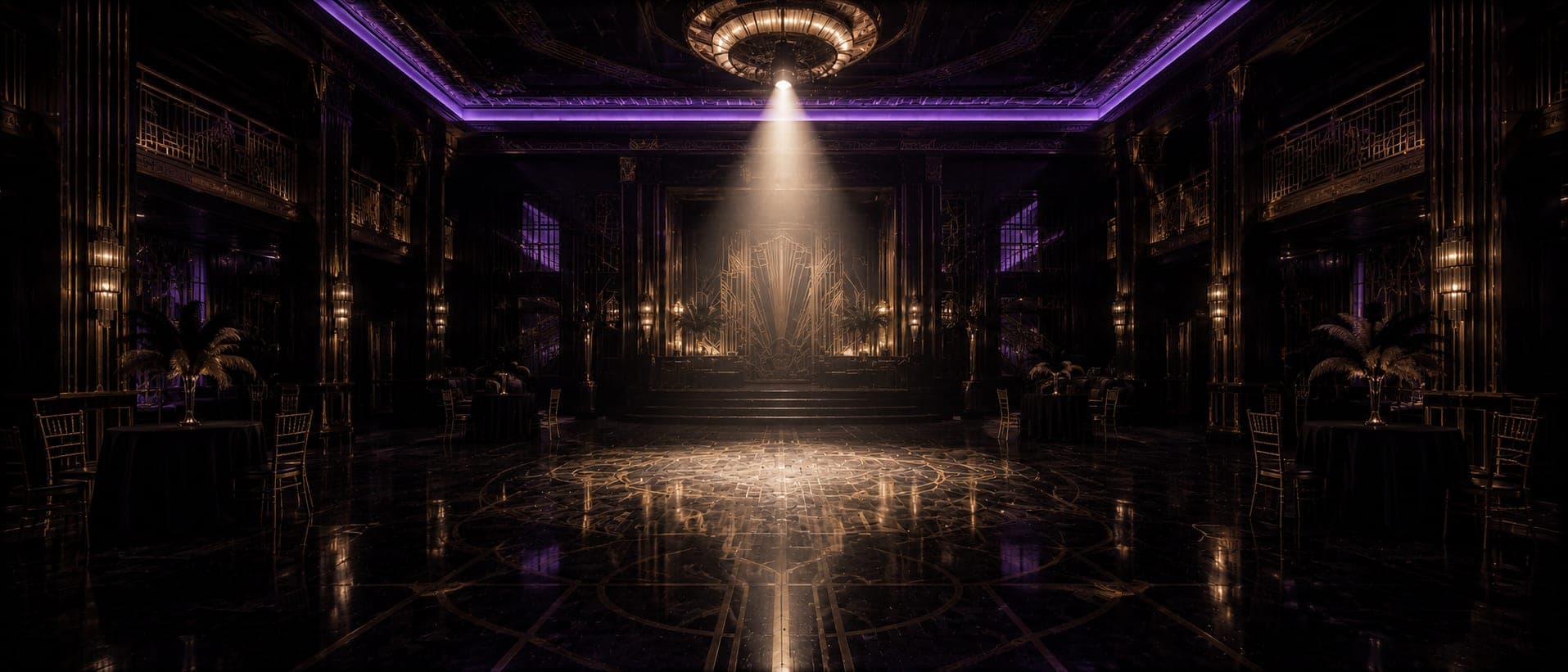
A themed party works when the theme runs through the entire experience — decor, music, catering, dress code if there is one — and fails when it's limited to a few decorative touches on top of a generic party format. The difference between the two versions isn't budget. It's design coherence.
Choosing a theme that fits the brand
The most effective theme isn't the most spectacular one. It's the one that connects in some way with the company's identity or with the moment being celebrated — a round-number anniversary, a product milestone, the personality of a specific team. A theme chosen with no connection to the company feels interchangeable with any other company's party.
Getting input from the team, not just leadership
A theme chosen solely by leadership or the agency, with no input from the people actually attending, risks missing what the workforce would actually connect with. A short survey with two or three theme options, sent out weeks ahead, doesn't just help pick the one that works best — it also builds anticipation before the event itself, because attendees already know something is being planned.
Extending the concept beyond decor
Music consistent with the chosen era or world, catering adapted to the concept where possible, and dress or photocall details that reinforce the theme without requiring a full costume — that's what separates a well-executed themed party from a room decorated with balloons in the right colour.
Case study
Zeptolab Gala GatsbyA themed evening in Great Gatsby style, 1920s art deco, for the Zeptolab team in Barcelona — the theme extended to dress, music and the full atmosphere.
Common mistakes when executing a theme
- Buying generic costume-shop decor instead of pieces designed for the specific space.
- Requiring a full costume when a large workforce doesn't have the time or personal budget to pull one together.
- Picking a trending theme with no real connection to the company, just because it worked at someone else's event.
- Leaving music out of the concept and running a generic party playlist unrelated to the chosen theme.
Case study
Novarama Pesadilla antes de NavidadA themed party set in the world of The Nightmare Before Christmas for the Novarama team in Barcelona — an example of a theme with its own distinct visual identity, not a generic one, carried through the entire space.
When a theme isn't the right call
Not every corporate event benefits from a theme. A convention with dense content, or a results presentation in front of investors, gains nothing from forcing a themed thread through it — it can even undercut how seriously the message lands. A theme works best at purely social events, where the goal is atmosphere and switching off, not delivering information.
The photocall as part of the concept, not an add-on
A photocall designed as part of the theme, with props and a backdrop consistent with the rest of the space, produces social content that extends the event's life well beyond the night itself. A generic photocall with just the company logo, with no connection to the theme, wastes an opportunity at an event where real investment already went into building a full atmosphere.
Communicating the theme before the event
Sending an invitation with visual cues to the theme — a colour palette, a reference image, a playlist shared ahead of time — builds anticipation and helps anyone who wants to add a small detail to their outfit know what tone is expected, without needing a full costume. Good communication beforehand means the theme registers before guests even walk through the door, not only once they're inside the space, and it cuts down on the number of attendees who show up with no idea what to expect.
Budget doesn't have to spike because of the theme
A well-executed themed party doesn't depend on a large budget. It depends on choosing two or three elements with real impact — lighting, a decorative focal point, music — rather than trying to superficially cover every possible aspect of the theme. Concentrating the budget on a few well-executed elements generates more visual impact than spreading it across many minor details. A single, well-executed focal point — a central decoration piece, a specific lighting effect — tends to stay in guests' memory more than an atmosphere spread across many minor elements.
A themed party doesn't need to be elaborate to work. It needs whoever walks through the door to understand the concept without anyone having to explain it.